*This is a guest post written by Shant Istamboulian, writer of Shantipedia. Check out his awesome post and fantastic blog. Thursdays are guest post day. If you would like to be featured email toborroworbuy@gmail.com.*

Adapting popular books into films has always been a popular idea. Since the silent era, filmmakers have reached into the publishing realm to inspire their vision. D.W. Griffith’s infamous and controversial movie, The Birth of a Nation, was based on Thomas Dixon, Jr.’s equally incendiary novel (later play) The Clansman, while Cecil B. DeMille used the Bible as the impetus for his 1927 film based on the life of Christ, King of Kings.
Classics ranging from Ben-Hur (the silent version and the Oscar-winning masterpiece starring Charlton Heston) to Gone with the Wind, were all based on best-selling books that entertained and challenged readers young and old alike.
The trend continued this past weekend with the release of Paper Towns, the popular YA novel by The Fault of Our Stars writer John Green, while later in the year we’ll see the release of the eagerly anticipated final chapter in the blockbuster Hunger Games franchise, Mockingjay—Part II.
Books are constantly being turned into movies, sometimes great, sometimes not, but in the past 30 years there’s definitely been some standouts. Here’s my top five.

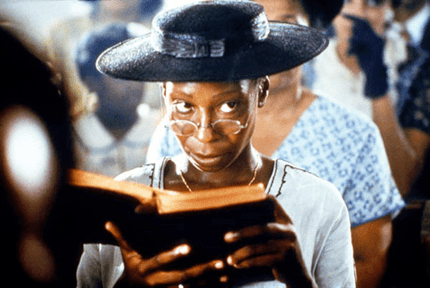
The Color Purple (1985, based on the book by Alice Walker)
When screenwriter Menno Meyjes set out to adapt the Pulitzer Prize-winning book of the same name, he was met with a tall order. Alice Walker’s piece is structured as a collection of letters written by protagonist Celie (played by Whoopi Goldberg in the film). How do you turn that into a feature film screenplay? The unenviable task was handled with care by Meyjes and the resulting film is touching and powerful from first frame to last and proved to be a classic example of how to adapt tricky material. Filled with wonderful performances by a great cast, including Danny Glover and Oprah Winfrey in early, career boosting roles, The Color Purple also had the distinction of providing a bridge for Steven Spielberg to segue from blockbuster filmmaking to more prestige films which would later include Empire of the Sun, Schindler’s List, and Saving Private Ryan.
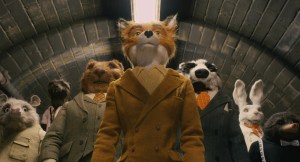
FANTASTIC MR. FOX (2009, based on the book by Roald Dahl)
Roald Dahl was a children’s writer but his books always contained an edge missing from others published in its day. This is why adapting his books has never been easy as filmmakers desperately try to toe the line between the sweet and salty. Most Dahl adaptations are serviceable at the very best. (Willy Wonka and the Chocolate Factory is considered a cult classic but a great adaptation of a Dahl book it is not.) The one filmmaker to successfully translate Dahl’s voice from page to screen was Wes Anderson (The Grand Budapest Hotel). His version of The Fantastic Mr. Fox is a great time, thanks to wonderful stop-motion animation, a collection of star talent (George Clooney, Meryl Streep, Bill Murray) that gets the material, and the perfect blending of tastes between author and filmmaker. Anderson’s style is not for everyone, but I dare you to watch this Fox without a smile on your face.

GONE GIRL (2014, based on the book by Gillian Flynn)
It’s rare for an author to adapt their own book into a screenplay. Rarer still is for them to knock it out of the park as Gillian Flynn did with her script to her dark page-turner. Working with David Fincher (Se7en, Fight Club), Flynn perfectly eliminates all the fat from her novel to deliver a tautly-paced stunner that never lets up, even to those who read the book (the “shock” moment in the book’s climax still managed to get me in the silver screen version). The Gone Girl script serves as a master class on how to adapt a popular novel and it was unfortunate that the Academy failed to nominate Flynn for a much deserved Best Adapted Screenplay Oscar (she would’ve deserved the win, too).

JACKIE BROWN (1997, based on the novel Rum Punch by Elmore Leonard)
Crime novelist Elmore Leonard always seemed like the bridesmaid when his work was adapted into films. While some of his westerns (3:10 to Yuma, Hombre) became minor classics, his crime novels never turned out the way you expected. Anyone remember 52 Pick-Up or Cat Chaser? It wasn’t until the late nineties when a trio of his books were turned into films that are now modern classics. Between 1995’s Get Shorty and 1998’s Out of Sight, Quentin Tarantino adapted his comic thriller Rum Punch into Jackie Brown. The brilliance of Jackie Brown is how Tarantino made the source material completely his own, changing protagonist Jackie Burke, a white, blonde-haired Miami flight attendant, to Jackie Brown, a black Los Angeles-based woman, while still retaining Leonard’s voice. Jackie Brown was Tarantino’s follow-up to Pulp Fiction so it didn’t get the proper attention it deserves, but with outstanding turns by Samuel L. Jackson, Michael Keaton, Robert De Niro, Bridget Fonda, and the one and only Pam Grier (in the role of her career), who makes magic with co-star Robert Forster in his Oscar-nominated role, this is a must watch. Better yet, read Rum Punch before watching Jackie Brown and marvel at Tarantino’s achievement.

MISERY (1990, based on the book by Stephen King)
A Stephen King film adaptation comes around almost every year but none have reached the perfection that is Misery. Director Rob Reiner tackled King for the second time (after Stand by Me) with a little help from Oscar-winning screenwriter William Goldman (All the President’s Men) to deliver a sometimes darkly comic, mostly chilling take on what it means to take fandom to its limits. James Caan (as novelist Paul Sheldon) and Kathy Bates (as his “number one fan” Annie Wilkes) are superb, playing the ultimate game of one upmanship. Goldman (against his will) even managed to soften the novel’s most brutal moment (SPOILER ALERT: in the book Annie chops off Sheldon’s foot and cauterizes the wound) without sacrificing its integrity and created an iconic moment in the interim. Bates won a well-deserved Oscar for Best Actress and her performance still tingles the spine.















![[Source: www.tumblr.com]](https://zakiyanjamal.com/wp-content/uploads/2014/01/spongebob.gif)












 Zakiya N. Jamal